|
General Comments:
However the masked bobwhite is listed under the
Endangered Species Act of 1973. It is also protected
by the Lacey Act. The U.S. Fish and Wildlife Service
has an approved recovery plan with a goal of
introducing self-maintained populations in Arizona and
Sonora, and eventually delisting the species.
Masked bobwhite Quail are not recommended for
beginners. They are difficult to raise and hence the
price for them is higher than other more common quail.
Due to the inbreeding of the North American
bobwhite they are not commonly kept in captivity with
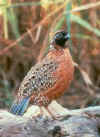
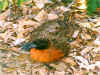
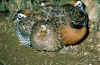
small viable bloodline. The Masked bobwhite is also popular with fanciers. However,
although they are not pure bloodline, they in fact
look every bit as much like they do in the wild,
including they very small size. Masked bobs are the
smallest of all quail except the button quail.
Masked bobwhites do best in a pen that has more length than width!
Provide plenty of branches and natural cover for the
hens to lay their eggs under and to provide the birds
with shelter to hide.
They are not winter hardy, and must be provided a place
they can form a natural
covey. We prefer to block all north and west sides of
their pens with thick plastic and place dry straw onto
the floor of the pen, which is removed when soiled or
wet or keep them indoors during the winter
months.
|