|
|
| Description:
The White Bobwhite, is a mutation of the Northern
Bobwhite. The Males and the females are extremely
difficult to sex, as they look so much alike. The only
difference between them is that the males have a
larger head than the female. They form large
groups during the winter called coveys. These coveys
can consist of up to 30 or more birds and when
disturbed, all will burst into flight at once.
A rarer subspecies, the Masked
Bobwhite, is native to the Southwest. They are
popular with breeders in captivity, but remain on the
Endangered Species List in the wild. These birds are
similar to the eastern race, but males have a very
dark face & throat. They also appear darker
overall.
The further south you travel into Mexico, the
Bobwhite subspecies differ a great deal from the
northern counterparts. Many have much more white on
the throats and a more detailed barring on the breast.
It is a shame that some of these races have yet to
make their way to our aviaries, as they are beautiful
birds. Perhaps in the future, some may make their way
and become established in captivity.
|
|
Breeding:
Bobwhites present no problems in captive rearing,
and can be produced easily in small or large aviaries.
Many producers house their breeders in breeding
batteries, some as small as 1'x1'x1' and keep them in
trios or pairs. You can choose to colony mate (several
hens with two or three males), trios (one male with
two hens) or in pairs.
Bobwhite hens begin laying in mid April and may lay
all summer long. The eggs are pure white and are
incubated for 21 days. You will probably have to use
artificial incubation with this species, as many
captive hens are mass producers of eggs are highly
unlikely to go broody in a cage setting.
|
|
General Comments:
As mentioned, Bobwhites are easy to keep and raise.
They are often one of the first species of quail for
the beginning quail breeder and many long-time
breeders keep them around for the male's call. Like
many other species of quail, they seem to do best on
wire, but can be kept on the ground if the aviary is
well-drained.
During the Winter, birds that are not kept indoors
such as a barn, should be grouped together so they can
form natural coveys for warmth. I also recommend
keeping dry straw or hay in the cage during the
Winter.
Bobwhite should be fed a good quality game bird
ration of at least 16% protein during the non-breeding
season to 20% during the laying period.
Mutations
There have been a number of mutations developed in
captivity. Some of the popular colors include the Mexican
Speckled, the Tennessee
Red, White,
Blonde,
and Silver
Bobwhites. There are also strains developed
for their large size, such as the Wisconsin Jumbo
and the Indiana Giant.
|
|
Place Mouse over Pictures to Enlarge
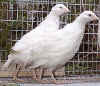
White
Bobwhite Pair
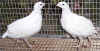
White
Bobwhite Pair
White Bobwhite Cubby
More Pictures
|